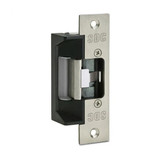
An electric strike replaces the standard strike plate in the door frame so an access control system, keypad, intercom or push button can release the door. The lockset stays the same: when the strike is energized (or de-energized, depending on the mode), its keeper swings open and the door can be pushed or pulled open with the latch still extended.
B&H Depot carries electric strikes from HES (including the 1006, 5000 and 9600 Series), Trine, RCI, SDC, Adams Rite and Von Duprin, for cylindrical locks, mortise locks, rim exit devices and aluminum storefront doors.
Fail secure strikes stay locked when power is removed and release when power is applied. Fail safe strikes release when power is removed and lock when power is applied. Fire-rated doors must stay latched during a fire, so they generally use fail secure strikes with a fire-rated listing. Many strikes are field selectable between the two modes.
Related: electromagnetic locks and door position switches.
A fail secure strike stays locked if power is lost. A fail safe strike unlocks if power is lost. Many electric strikes can be switched between the two modes in the field.
Use the voltage your power supply and access control system provide. Many strikes accept both 12 and 24 volts; check the product specifications.
Yes, but you need a strike made for that lock. Mortise locks and rim exit devices use different strike bodies than cylindrical locks.
A switch in the strike that reports when the latch is fully in the strike, so your system knows the door is secured.
An electric strike keeps your existing lockset and allows free mechanical exit. A maglock holds the door with a magnet and needs a request-to-exit device and fire alarm release. Strikes are often preferred where free egress and fire ratings matter.